VR speaking-situation practice for exposure work - social anxiety, public-speaking, and presentation
Therapy withVR is usually discussed in speech-language circles. But the software - clinician-controlled VR speaking situations with adjustable difficulty - is a natural fit for VRET (virtual reality exposure therapy) work on social anxiety, presentation anxiety, public-speaking fear, or more general avoidance of communicative situations. CBT-compatible and telehealth-ready. You are welcome here.
How it fits your practice
- Step-by-step exposure, clinician-controlled. Number of avatars, their emotions, background noise, turn length - all adjustable live. You set the edge and keep it there; no jumps without consent.
- CBT-compatible. Pair VR practice with thought-record and behavioral-experiment work. The session can pause at any moment for in-session reflection, then resume.
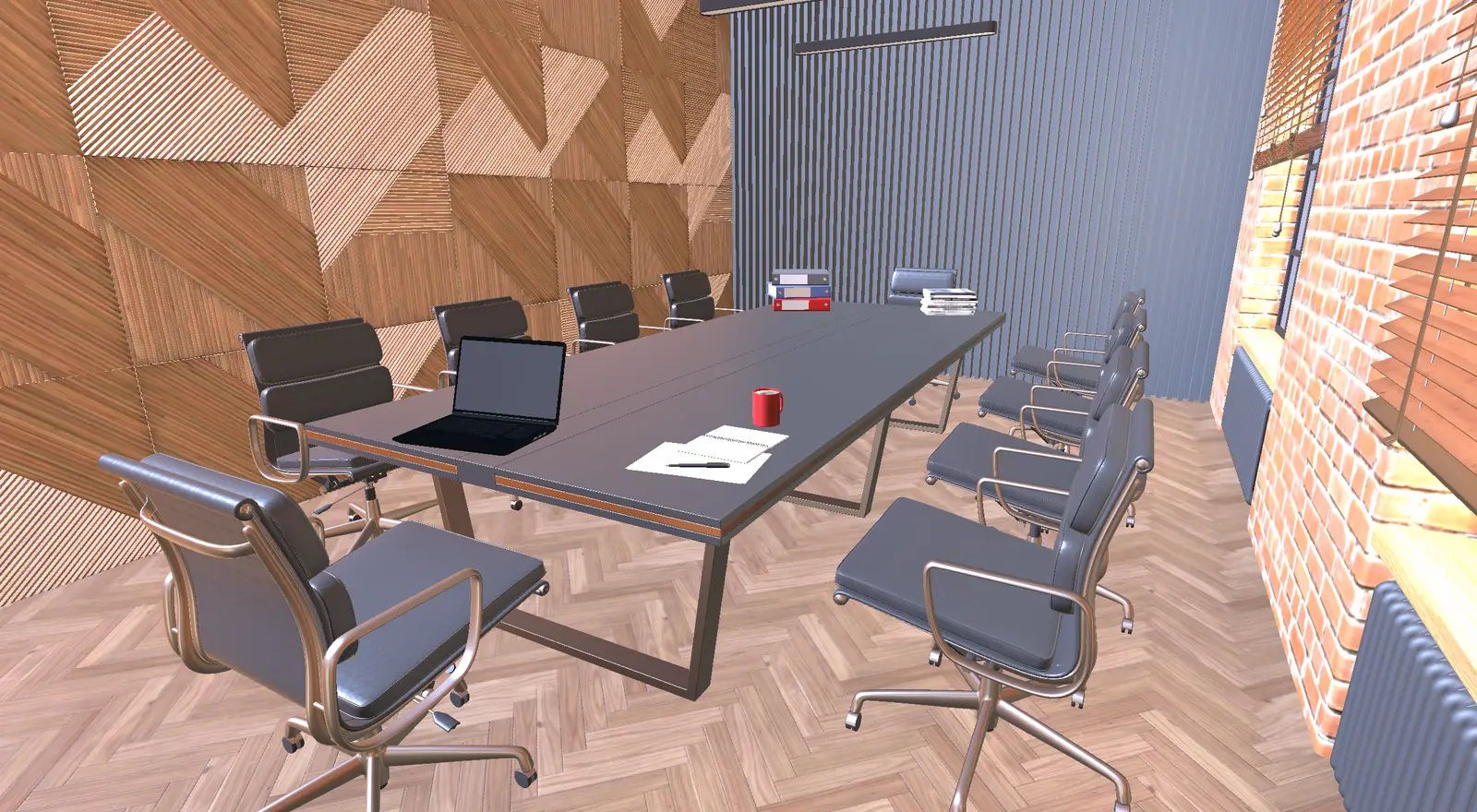
- Context flexibility. Café, classroom, meeting room, auditorium, reception, speaking circle, customizable empty room. Stages of difficulty within one exposure progression.
- No recording by default. The software captures no audio or video. If a client consents to session recording, that can be done on the headset using Meta's capture tools under your control - but is never automatic.
Where this is being used
Social anxiety
Practice conversations with strangers, group entry, phone calls.
Presentation anxiety
The Auditorium scene lets clients practice with a visibly populated room.
Meeting / workplace anxiety
Meeting room and speaking circle for turn-taking, interruption, disagreement.
Selective mutism (adjunct)
Low-stakes single-avatar situations for step-by-step verbal emergence work.
Public-speaking fear
Escalating audience size and emotional reactions as the client builds tolerance.
Evidence base for VRET
Three RCTs and a meta-analysis underpin the case for VRET in social and public-speaking anxiety:
- Anderson et al. 2013 (n=97 RCT): VR exposure equivalent to group CBT; both significantly improved over waitlist. Gains maintained at 12-month follow-up.
- Wallach, Safir & Bar-Zvi 2009 (n=88 RCT): VR-CBT equivalent to traditional CBT for public-speaking anxiety, with lower dropout in the VR condition.
- Bouchard et al. 2017 (n=59 RCT, British Journal of Psychiatry): Pre-registered superiority trial: VR exposure significantly more effective than in-vivo exposure on the primary social-anxiety outcome (LSAS-SR) at post-treatment and 6-month follow-up. Practical advantages for VR documented (cost, confidentiality, access to ridicule stimuli).
- Opriş et al. 2012 (meta-analysis): Pooled effect sizes show large gains over waitlist and equivalent effects to non-VR active treatments. Clear dose-response: more sessions = larger gains.
For the full synthesis with clinical implications, see the blog post What 20 years of VR social-anxiety research means for speech therapy. The Evidence Hub indexes speech-language-specific VR studies; for the wider anxiety literature, PubMed's VR exposure therapy index (opens in new tab) is a good starting point. Therapy withVR is a practice and exposure tool - it is not a medical device and does not replace CBT protocol decisions made by the clinician.
External resources for psychologists
- APA Division 12 - Society of Clinical Psychology - evidence-based treatment lists, including exposure therapy for social anxiety disorder.
- British Psychological Society (BPS) - UK professional body with practitioner standards and CPD resources.
- European Federation of Psychologists' Associations (EFPA) - European-level psychology profession resources.
- Anxiety & Depression Association of America (ADAA) - clinician and client resources for anxiety-difference treatment, including evidence-based guidance.
Interested?
Tell me about the clients you'd want to try this with, and we'll find the right starting point.