Every speech-language professional has faced the same frustration. You spend a session working with an individual, it goes well in the therapy room, and then the real world feels completely different. The cafe is too loud. The classroom is too unpredictable. The meeting room is too high-stakes. Role-play helps, but both you and the individual know it is not real. The gap between the clinic and everyday life (the reason Therapy withVR exists) has always been one of the hardest problems in speech therapy.
Virtual reality is closing that gap. And the research is starting to show just how effectively.
The evidence is building
The evidence for VR in speech and communication contexts stretches back two decades. More recently, three peer-reviewed papers have been published using the withVR platform, each examining a different aspect of how people speak and use their voice in virtual environments.
Some of the strongest foundational evidence comes from Brundage and colleagues at George Washington University. In a 2015 study published in the American Journal of Speech-Language Pathology, the primary speech measure during a challenging virtual audience speech correlated at rho = 0.99 with the same measure during a live audience speech (Brundage & Hancock, 2015). That near-perfect correlation demonstrates that well-designed virtual speaking situations can elicit speech behavior essentially equivalent to real life.
Brundage & Hancock 2015 · 10 adults who stutter
Stuttering frequency in challenging virtual vs. live audience
Each dot is one of the ten adults who stutter from Brundage & Hancock 2015. The dashed line is the y = x reference (perfect agreement). The neutral virtual audience condition (not shown) also correlated significantly with live, but less strongly at ρ = 0.82.
Source: Brundage SB & Hancock AB (2015). Real Enough: Using Virtual Public Speaking Environments to Evoke Feelings and Behaviors Targeted in Stuttering Assessment and Treatment. American Journal of Speech-Language Pathology, 24(2), 139-149. DOI: 10.1044/2014_AJSLP-14-0087. Data points reconstructed from the published Figure 4b to illustrate the correlation pattern.
Building on this broader evidence base, Bauerly and Jackson published a 2024 study in the Journal of Speech, Language, and Hearing Research using Research withVR to examine how attentional focus affects articulatory variability in adults who do and do not stutter. The findings showed that the virtual environment successfully created the controlled conditions needed to detect meaningful differences in speech production.
In 2025, Leyns and colleagues published “Virtual Reality as a Tool in Gender-Affirming Voice Training” in the Journal of Voice. This study explored whether VR could serve as a meaningful practice environment for individuals working on voice goals, an area where safe, realistic practice spaces are difficult to find outside the clinic.
Most recently, Dasdogen and Hitchcock published “The Effects of Visual Input in Virtual Reality on Voice Production: Comparing Trained Singers and Untrained Speakers” in the Journal of Voice in 2026, investigating how the visual realism of a virtual environment influences vocal behavior. Together, these studies point to the same conclusion: when people step into a well-designed virtual speaking situation, their bodies respond as though it is real.
Beyond these published papers, 19 active research projects were underway in 2025 across universities and clinics worldwide. The evidence base is growing quickly.
Why VR works where role-play falls short
The idea of using VR in speech therapy is not new. Early studies explored virtual environments for exposure therapy, building on the principle that if a situation feels real enough, the nervous system responds accordingly. What has changed is the technology and, critically, the level of control it offers clinicians.
The core insight is simple. In clinical practice, you have two options for practicing speaking situations outside the therapy room. Role-play does not feel real enough: both the clinician and the individual know it is pretend, and that awareness limits the emotional and physiological response. The real world, on the other hand, feels entirely real but offers almost no control. You cannot pause a classroom. You cannot adjust the number of people in a cafe. You cannot replay a job interview.
VR sits directly between these two extremes. It is realistic enough to trigger genuine responses, but controlled enough to be therapeutic. That middle ground is where the most productive work happens.
What makes a virtual environment feel real
Realism in VR is not just about high-resolution graphics. It is about the details that the brain uses to assess whether a social situation is real, and those details are overwhelmingly about people.
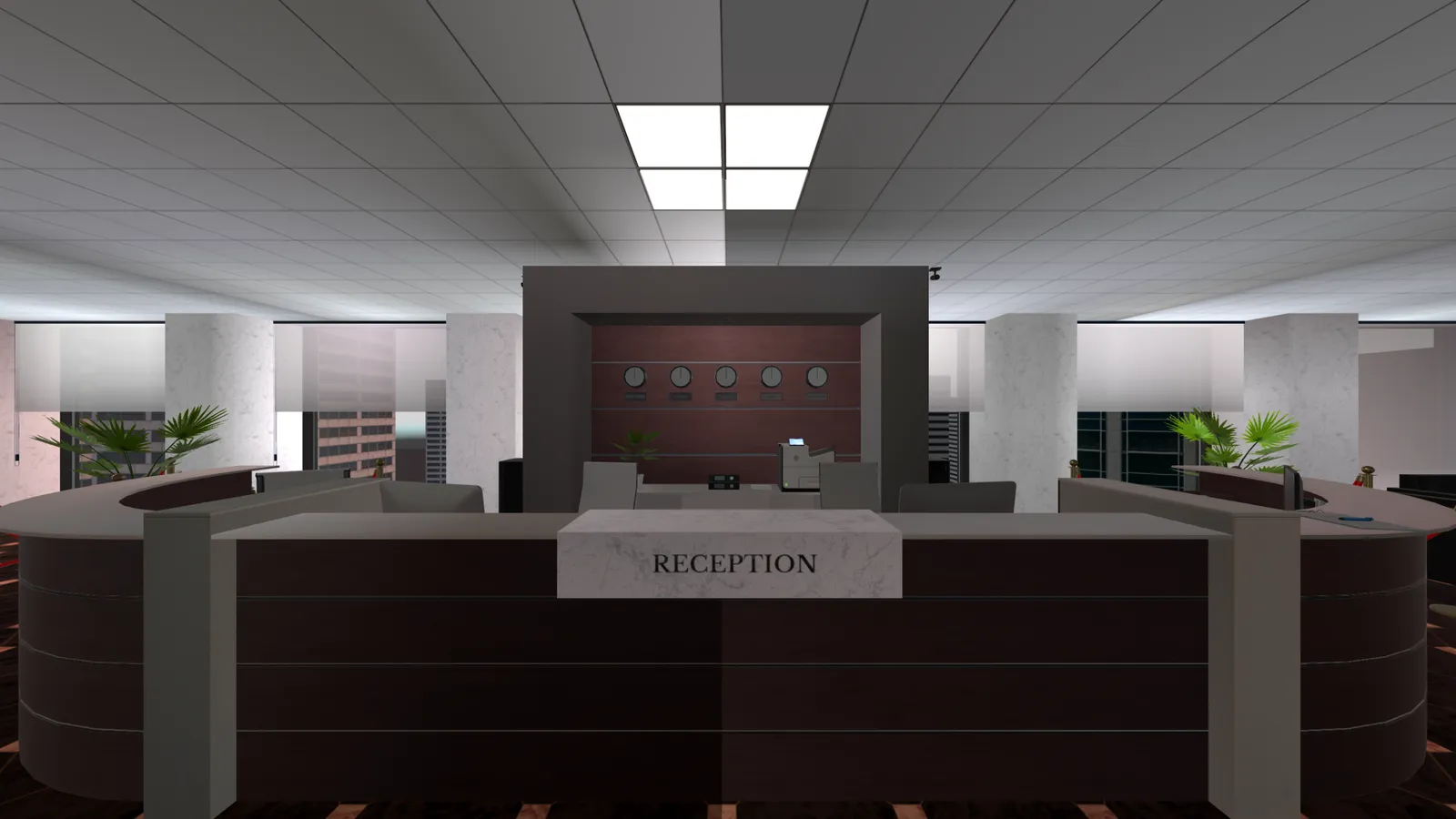
Therapy withVR includes over 12 speaking environments (a cafe, a classroom, a bakery, a meeting room, an auditorium, and more), each designed around the kinds of situations that individuals commonly encounter and find challenging. But the environments are only part of the equation. The virtual people in those environments matter just as much, if not more.
The avatars are designed to behave the way real people do in conversation. They show a range of emotions (interest, encouragement, impatience, distraction) through subtle facial expressions and natural mouth movement during speech. They are not static figures standing in a room. They shift in their seats. They look at you when you speak. They look away when they lose interest. That social feedback loop, the feeling that someone is actually listening or not listening, is what makes a speaking situation feel real.
The therapist stays in control
One of the most important aspects of Therapy withVR, and one that distinguishes it from consumer VR applications, is that the therapist controls everything in real time from a laptop. While the individual is immersed in the virtual environment wearing a headset, the clinician is choosing the scene, adjusting the audience size, changing avatar emotions, and responding to what is happening in the session moment by moment.
This means the therapist can increase difficulty gradually. Start with a single listener in a quiet room. Add more people. Introduce background noise. Have an avatar look skeptical. Each adjustment can be made without breaking the immersion, and each one gives the clinician precise control over the therapeutic challenge.
That real-time control also means the therapist can de-escalate. If an individual becomes overwhelmed, the clinician can simplify the scene instantly: fewer people, friendlier expressions, a calmer setting. This kind of responsive, graded exposure is difficult to achieve in real-world practice and impossible in traditional role-play.
What this means for clinical practice
The research findings matter because they validate what many clinicians already suspect when they see individuals respond to VR: these environments produce real communicative behavior, not simulated behavior. When speech behavior in VR correlates at rho = 0.99 with live audience speech, when voice production changes based on the virtual audience, and when individuals report genuine anxiety and genuine confidence in virtual speaking situations, clinicians can trust that the work done in VR transfers.
The most direct test of that transfer claim to date comes from a 2026 randomized controlled trial. McCleery and colleagues, publishing in Journal of Autism and Developmental Disorders, randomized 47 autistic teens and adults to either three short VR police-interaction practice sessions or a matched-dose video-modeling intervention. The post-test was a live interaction with an actual uniformed police officer, scored by masked coders. The VR group gave significantly more appropriate responses and showed calmer body language during the live encounter; the video-modeling control did not. This is one of the cleanest demonstrations to date that VR-based practice generalizes to real-world social interactions with strangers - precisely the gap between clinic and life that VR is meant to close.
VR will not replace real-world practice. The goal was never to keep individuals in a headset permanently. The goal is to bridge the gap between the therapy room and the outside world, to give clinicians a tool that lets them create realistic, repeatable, adjustable speaking situations on demand.
The research suggests that bridge is solid. And as the evidence base continues to grow, the case for VR as a standard part of the speech therapy toolkit only gets stronger.
A note on privacy: no audio or video is ever recorded during a session, and no identifiable client data needs to enter the system. If you are evaluating any new technology for your practice, I put together a free checklist covering data privacy, informed consent, and more.
Further reading
- Ecological validity in VR speech therapy: what the evidence says - The full picture of the validation research summarized above
- How to read a VR speech therapy study - For evaluating VR studies critically before bringing them into practice
- Brundage and Hancock (2015) - The foundational ecological-validity study cited above
- McCleery et al. (2026) - The most recent direct test of real-world transfer (autism + live police encounters)
- Evidence Hub - All peer-reviewed studies on VR in speech therapy, with plain-language summaries
- Therapy withVR documentation - The features that make this kind of practice possible
If you are exploring how VR might fit into your practice, get in touch. I am happy to show you the software and talk through whether it could work for your setting.